Javea is 90 km north of Alicante airport, about 1 hour 5 minutes up the AP-7. A rank taxi costs €140-160, the ALSA coach €18-21 per person (usually changing at Denia), and a pre-booked private transfer from €95 per car. This guide covers the drive, the price comparison, and why a car or a door-to-door transfer suits Javea's spread-out, hilly urbanisations better than public transport does.
Javea sits at the far end of the Costa Blanca's northern arc, past Denia and beneath the Montgó, so it is one of the longer common runs from the airport.
The drive leaves the terminal on the AP-7, the toll-free motorway that runs the length of the coast, passing the Calpe and Benissa exits before the final stretch down towards Denia and Javea. It is a straightforward 90 km, taking around 1 hour 5 minutes in normal traffic. The last few kilometres matter more than the distance suggests: Javea's town is split between the flat coastal strip and a hillside old town, and many holiday properties sit further out again on steep lanes towards Cabo de la Nao, which is why a taxi or transfer with your exact address saves real time over a bus that stops well short of the door.
All figures are indicative for 2026; taxi fares add the usual airport, night and holiday supplements, and on a run this long some drivers agree a flat rate rather than use the meter.
| Option | Price | Journey time | Notes |
|---|---|---|---|
| Taxi (rank) | €140-160 | ~1 h 05 | Metered or flat rate; higher at night, Sundays and holidays |
| ALSA coach | €18-21 pp | 1 h 45+ | Usually via Denia, with a possible change onto a local connection |
| Private transfer | from €95 | ~1 h 05 | Fixed price per car, up to 4 passengers, door to door |
| Hire car | from ~€25/day | ~1 h 05 | Picked up at the terminal; best for reaching outlying urbanisations |
There is no tram or train anywhere near Javea, so public transport means the ALSA coach, and it is not a direct service in the way it is to Benidorm or Calpe: most departures call at Denia first, roughly 10 km short, before continuing or requiring you to change onto a local bus. That is manageable with hand luggage on a quiet afternoon, considerably less so with cases and a tight onward connection, which is why most families and couples book either a taxi or a transfer straight through.
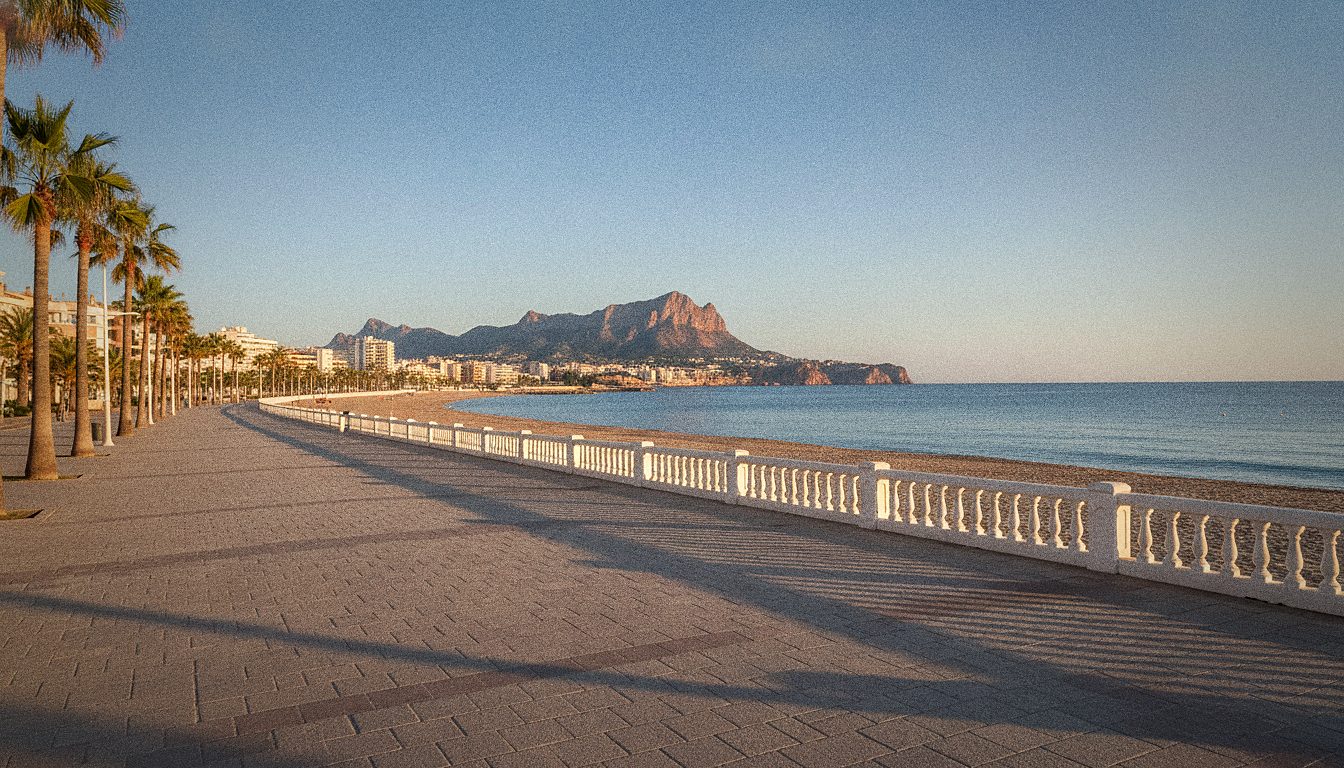
Javea is really three places joined by a few kilometres of road, and it helps to know which one you're headed to before you book. El Arenal is the sandy beach and the promenade of bars and restaurants that most package holidays picture, busy and flat, with plenty of hotels and apartments within easy walking distance of the sea. The port (Duanes de la Mar) sits a short drive north, a working harbour and fish market wrapped in more restaurants, quieter than the Arenal but still coastal. The historic old town — Xàbia Poble — is set back inland on a low hill, a cluster of narrow streets, the fortified church and the Friday market, with a genuinely different feel from either seafront area and its own scatter of guesthouses.
Beyond all three, a large share of Javea's holiday accommodation is in villa urbanisations climbing the hills towards Cabo de la Nao and the Montañar and Portitxol headlands — properties with sea views bought precisely for the quiet and the drop to secluded coves, but built on terrain that a scheduled bus route was never going to serve well. A taxi or private transfer given the exact villa name or street handles this without difficulty; relying on the coach and a local connection from the centre adds a leg of the journey that a car simply skips.
From €95 per car, driver waiting in arrivals with flight tracking, taken straight to your address whether that's the Arenal, the port or a villa near Cabo de la Nao. The most reliable option for this distance.
No booking needed — walk out and go for €140-160. Sensible if you land at an odd hour and just want to move, though the fare rarely beats a booked transfer on this route.
€18-21 per person, usually routed via Denia with a possible change. The cheapest option travelling light, but the slowest and least convenient with luggage or an outlying address.
Strongly worth considering for a Javea stay — the town's coves, the old town and the hillside urbanisations are far easier to reach on your own schedule than by waiting for a bus.
Indicatively €140-160 for the 90 km run, which takes about 1 hour 5 minutes on the AP-7. Night, Sunday and public holiday supplements sit on top of that, and drivers may add a fixed rate rather than run the meter on a trip this long.
ALSA runs coaches from the airport towards Javea, but most services route via Denia rather than going straight there, so the fare of €18-21 per person can include a change of bus and adds time compared with a taxi or transfer.
From around €95 per car, fixed at booking for up to four passengers with luggage. On a route this long and with Javea's outlying urbanisations, it is usually the most predictable option and often works out cheaper per person than the taxi meter.
Around 1 hour 5 minutes by taxi or transfer on the toll-free AP-7, and typically longer by ALSA coach once the Denia connection and stops are factored in.
Often yes if you are staying more than a few days. Javea's holiday villas are spread across steep, hilly urbanisations well away from the Arenal and the old town, and buses between them are infrequent, so a hire car or a scooter gives far more freedom than relying on taxis for every trip.
Anywhere you specify — the Arenal beachfront, the port area (Duanes de la Mar), the old town (Xàbia Poble) set back from the coast, or one of the villa developments towards Cabo de la Nao. A private transfer takes an exact address; a taxi driver will simply need the street name.
Most ALSA services from Alicante airport call at Denia first, roughly 10 km short of Javea, before continuing or requiring a change onto a local connection — worth checking the specific timetable before relying on it with heavy luggage.